- Статьи
- Science and technology
- Notice the shift: earthquake in Kamchatka may happen again within a few months

Notice the shift: earthquake in Kamchatka may happen again within a few months
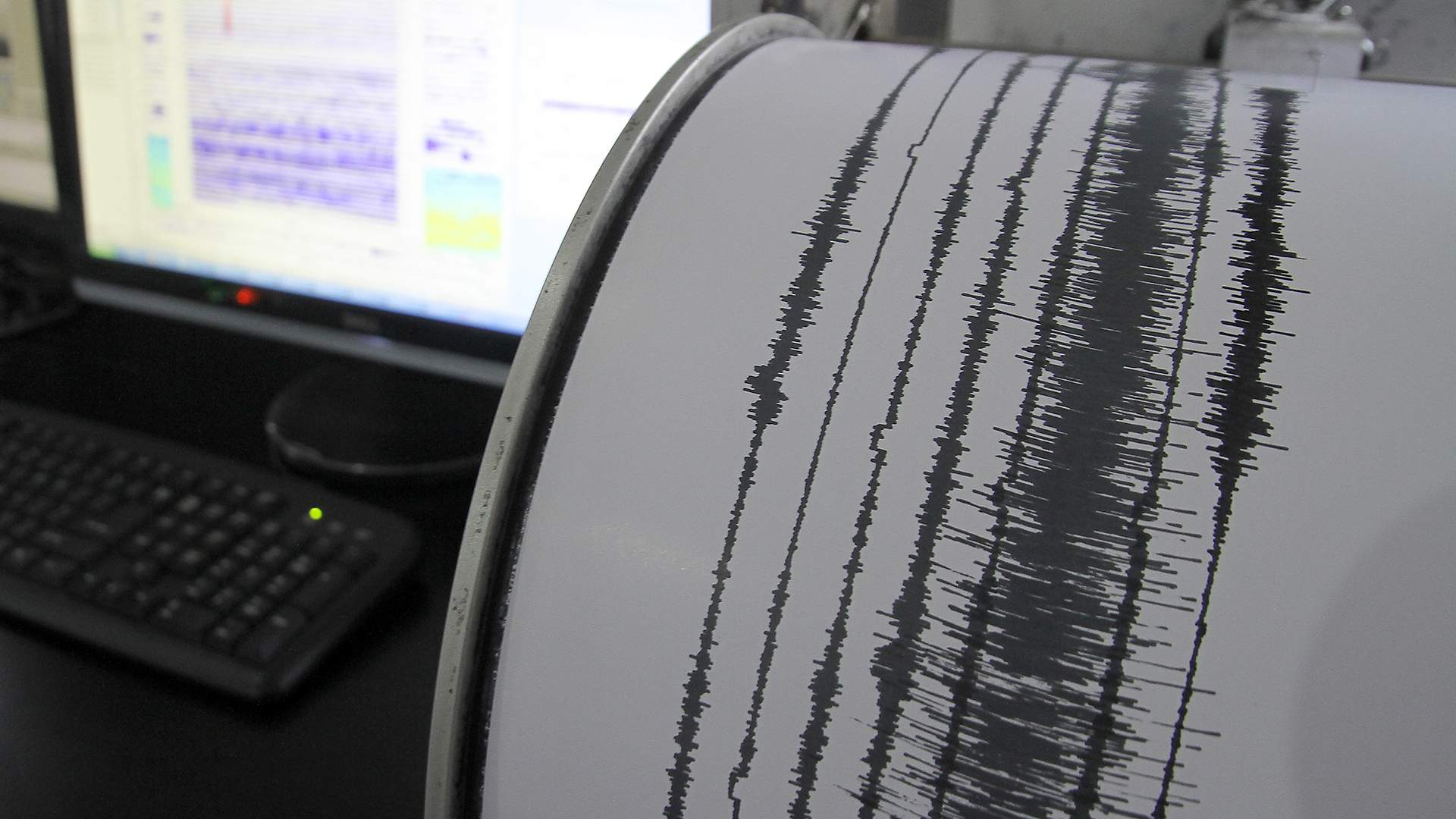
A powerful earthquake with a magnitude of more than 7 may occur again in the Kamchatka region in the coming months, scientists told Izvestia. According to their calculations, not all the energy accumulated at the junctions of tectonic plates was released during the July 30 tremors, and they may repeat until complete stress relaxation is achieved. On July 31, more than 140 repeated seismic tremors ranging in magnitude from 4.0 to 6.7 were recorded in the disaster area. According to local residents, in some areas the vibrations were felt even stronger than the day before. Tsunami warnings remain in effect in the United States, New Zealand and Chile. In a Latin American country, authorities are asking citizens to leave the coast and refrain from staying at sea and on beaches — the wave height there has reached 2.5 m.
Earthquake in Kamchatka
The Kamchatka earthquake of July 30 with a magnitude of 8.8 led to a strong, but not complete, release of tectonic stresses on plate boundaries. Complete relaxation of these stresses will take months, during which earthquakes with a magnitude above 7 can also occur, Alexey Ostapchuk, associate professor at MIPT and head of the Laboratory of Deformation Processes in the Earth's Crust at the Institute of Geospheric Dynamics (IDG) of the Russian Academy of Sciences, told Izvestia.
Kamchatka is a subduction zone where the Pacific Plate is slowly sinking under the Eurasian continental plate at a rate of about 8 cm per year. Due to the fact that the plates are not completely smooth, special locked areas are formed — tectonic hooks. The plates cannot move relative to each other there. Tectonic stresses accumulate in these places. When their level becomes maximum and exceeds the strength of the hooks, they collapse, and the plates slip sharply. It is at this moment that seismic energy is released and an earthquake is felt, the expert explained.

— In ordinary earthquakes, one hook is destroyed. The Kamchatka earthquake was accompanied by the destruction of at least three hooks, which makes its hearth unique. The released seismic energy turned out to be significantly lower than is observed in earthquakes of this magnitude. The force probably decreased due to the active seismic process that began in Kamchatka on July 20, 2025 after the 7.4 magnitude event," said Alexey Ostapchuk.

The rupture of rocks during the earthquake on July 30 started in the Avacha Bay near Petropavlovsk-Kamchatsky and stopped south of Paramushir Island (the city of Severo-Kurilsk), thus spreading over 600 km. But the energy was released unevenly. At the first, relatively weak stage, the propagation of the fault was accompanied by a plate displacement of 3.5–4 m. At this stage, the gap spread to 100 km in 40 seconds. Then, as it spread to the southwest, the amplitude of the displacement began to increase sharply and reached maximum values of 10-15 m after about two minutes.

Avacha Bay
According to the expert, the last time an earthquake of this magnitude occurred was in 1952. At the same time, the foci of both events coincide.
However, according to Irina Vladimirova, senior researcher at the Tsunami Laboratory at the P.P. Shirshov Institute of Oceanology of the Russian Academy of Sciences, most of the tectonic stress was removed during the earthquake on June 30, and powerful aftershocks of magnitude 7.5 are most likely in the first weeks after the main event.
— According to our estimates, significant stress has accumulated in the southern part of the Kamchatka subduction zone since the devastating earthquake of 1952 with a magnitude of 9.0, corresponding to a potential earthquake with a magnitude of about 8.6–8.7. Apparently, the earthquake of magnitude 8.7–8.8, which occurred on July 30, relieved the bulk of the stress accumulated over decades of tectonic activity, — said Irina Vladimirova.

An earthquake-damaged kindergarten in Petropavlovsk-Kamchatsky
At the same time, an active series of repeated aftershocks, the so—called aftershocks, continues in the epicenter area. After such a powerful earthquake, they can last for several months, and sometimes up to a year. They are especially intense in the first weeks after the main event. During this period, repeated tremors of magnitude up to 7.5 are possible, which can also cause significant underground vibrations and even local tsunamis, the expert added.

What happened on the second day after the earthquake
More than 140 aftershocks (repeated seismic tremors) occurred during July 31, Izvestia calculated based on data from the Kamchatka branch of the Federal Research Center United Geophysical Service of the Russian Academy of Sciences. The magnitude of such tremors ranged from 4.0 to 6.7. At the same time, up to nine aftershocks occurred per hour.
"I live on the fifth floor, there is a feeling that it does not stop pumping," wrote one of the residents of the Kamchatka Territory in the comments on social networks.
"I didn't feel the tremors yesterday like I did today," said another user.

Local residents in Victory Park in Petropavlovsk-Kamchatsky. Some residents spent the night in tents in the park for fear of another earthquake.
Earlier, the regional Ministry of Emergency Situations reported that on July 30, more than 200 aftershocks of magnitude from 3.5 to 6.5 occurred within 12 hours after the earthquake. There were 200 people in temporary accommodation facilities, the Ministry of Emergency Situations of the Kamchatka Territory reported. They noted that some people were scared and needed the help of psychologists. PVR will be available to residents of the region for several more days, the governor of the Kamchatka Territory, Vladimir Solodov, promised in his Telegram channel.
"There is no great demand, but for those who nevertheless asked for help, it is very important," he wrote.

Chimneys collapsed in houses in Severo-Kurilsk during the strongest earthquake
The repeated tremors that occurred in the Pacific Ocean on July 31 were felt by residents of the city of Severo-Kurilsk, the Sakhalin Ministry of Emergency Situations reported. They noted that, according to preliminary data, there is no new damage. The transport infrastructure of the North Kuril region is gradually resuming work after the earthquake and tsunami, the government of the Sakhalin region reported.
"The helipad is already ready for receiving and dispatching vessels. The berthing facilities in the port will be examined in the near future, after which a decision will be made to launch a sea service," the ministry noted.
They also reported that air traffic will resume in the region in the near future.

How the earthquake in Kamchatka affected the whole world
The threat of tsunamis and earthquakes for the countries of the Pacific region is gradually fading. Some warnings have been lifted in the United States — for the coastal areas of Washington and Oregon. In California, they continue to operate on two sections of the coast — in the north of the state and in the south-central part. Warnings continue to be relevant for the Hawaiian Islands and the Aleutian Ridge in Alaska. However, the coastal area of the western United States is still potentially dangerous. According to the US National Weather Service, the waves reached 4 m in height in some places.
The situation is similar in Japan, although the consequences for the island country turned out to be more detrimental. After the announcement of a tsunami threat in connection with the Kamchatka earthquake, one person died and 10 were injured. Information about damage caused by the effects of the disaster has not yet been received. Later, the tsunami warning was lifted in several areas. Japan has informed the International Atomic Energy Agency that the discharge of purified water from Fukushima-1 into the ocean will resume soon. The process was previously terminated for security reasons.

Japanese residents evacuated to higher ground due to the tsunami threat
At the same time, tsunami warnings remain in effect in New Zealand and other island states. Officials in Wellington said the waves were causing strong and unusual currents that could persist throughout the day.
Chile, which is extremely vulnerable to earthquakes and tsunamis, maintains a high-security regime requiring citizens to leave the coast and refrain from staying at sea and on beaches. The wave height there reached 2.5 m. Although on Easter Island, where an evacuation was carried out on July 30, the tsunami warning was canceled. The height of the waves there reached up to 60 cm. The Government of Peru keeps all ports closed.

Earlier, the United Nations announced its readiness, if necessary, to provide support in the aftermath of the earthquake in Kamchatka. The Office of the Organization for the Coordination of Humanitarian Affairs continues to monitor the situation in the world. According to preliminary data, the tsunami did not cause serious damage to coastal infrastructure in other countries.
Denis Gritsenko, Sofya Temchenko, Anastasia Kostina, Andrey Korshunov worked on the material.
Переведено сервисом «Яндекс Переводчик»
